New TVS Raider 125 2025 Model Launched With 60kmpl Mileage, Sporty Design And Affordable Price
If you’re searching for a sporty, feature-packed tvs raider 125 review that actually helps you decide which variant to buy, this long-form guide has you covered. I’ve pulled the latest specs, prices, features and real-world impressions from reliable sources and wrapped them with practical, 10-years-of-blogging buying advice so you can make the right call in minutes.
Quick Summary (for the busy reader)
- What it is: A 125cc commuter with the soul of a small streetfighter aggressive styling, peppy engine, segment-leading features.
- Power & torque: 8.37 kW (≈11.38 PS) @ 7,500 rpm & 11.2 Nm @ 6,000 rpm; iGO Assist variant lists 11.75 Nm and quicker 0–60.
- Weight, seat, tank: 123 kg kerb, 780 mm seat height, 10-litre fuel tank.
- Brakes & hardware: 240 mm front disc, 130 mm rear drum with SBT (synchronised braking).
- Variants & ex-showroom Delhi (typical range): Drum, Single-Seat, Split-Seat, iGO Assist, SmartXonnect (TFT), Super Squad Edition; prices commonly span ~₹87,375 to ~₹1.03 lakh; iGO was introduced at ₹98,389 (Oct 2024).
- Mileage (what to expect): Lab/claimed figures vary wildly from mid-50s to low-70s km/l; independent road tests and owner data consistently land around ~55–60 km/l in mixed use.
- Tech highlights: 5-inch TFT on SX with TVS SmartXonnect, turn-by-turn nav, voice assist, call/SMS alerts; riding modes; small under-seat storage; optional USB.
- Warranty: TVS motorcycles carry 5-year/60,000 km warranty (policy-wide).
- Best for: City riders who want style + efficiency + modern features without jumping to 150–160cc.
Why the TVS Raider 125 still stands out in 2025
TVS didn’t treat the Raider like a bare-bones commuter. From day one it brought sharp design, a punchy 3-valve motor and rider tech that rivals 150cc bikes. Since the BS6 Phase-2/OBD-2 era, TVS has kept it fresh with the SX (TFT + SmartXonnect) and, more recently, the iGO Assist variant with start-stop and electric torque assist for crisper launches and better city efficiency.
Add to that a 123 kg kerb weight, 780 mm accessible seat and 180 mm ground clearance and you get a commuter that’s friendly in traffic yet stable at speed. The 240 mm front disc with SBT inspires confidence, and the chassis balance is one of the Raider’s unsung strengths.
Detailed Specifications (India-spec, BS6.2/OBD-2)
- Engine: 124.8 cc, 3-valve, air-/oil-cooled, fuel-injected
- Output: 8.37 kW (≈11.38 PS) @ 7,500 rpm | 11.2 Nm @ 6,000 rpm
- iGO Assist variant lists 11.75 Nm and 0–60 km/h in 5.8 s.
- Gearbox: 5-speed
- Kerb weight: 123 kg | Seat height: 780 mm | Ground clearance: 180 mm
- Wheelbase: 1,326 mm | Fuel tank: 10 L
- Tyres (tubeless): 80/100-17 (F), 100/90-17 (R)
- Brakes: 240 mm front disc, 130 mm rear drum, SBT (synchronised braking tech)
These numbers are from TVS’ official specification page for the Raider (India). Always cross-check the VIN plate or owner’s manual of your specific bike for minor running changes.
Variants & Price Guide (Ex-Showroom, Delhi)
The Raider family has grown, and the names sometimes confuse buyers. Here’s the clean version:
- Drum / Single-Seat / Split-Seat: Core mechanicals with either drum or front disc; split seat adds aesthetics and slight comfort/pillion differences.
- iGO Assist: Adds start-stop and integrated starter-generator-based torque assist for snappier low-speed responses and better city economy; TVS introduced it at ₹98,389 (ex-Delhi) in Oct 2024.
- SmartXonnect (SX): 5-inch TFT cluster, Bluetooth connectivity with SmartXonnect, nav, voice assist, ride analytics. Typically around ₹1.02–1.03 lakh (ex-Delhi).
- Super Squad Edition (SSE): Themed graphics (Marvel inspirations like Iron Man/Black Panther on official listings) with Raider underpinnings.
As a general buying window in Delhi, Raider variants typically span ~₹87,375 to ~₹1.03 lakh ex-showroom; SX on-road (Delhi) is usually ~₹1.20 lakh once RTO & insurance are added. Expect small month-to-month fluctuations and city-wise differences.
Design & Build Quality
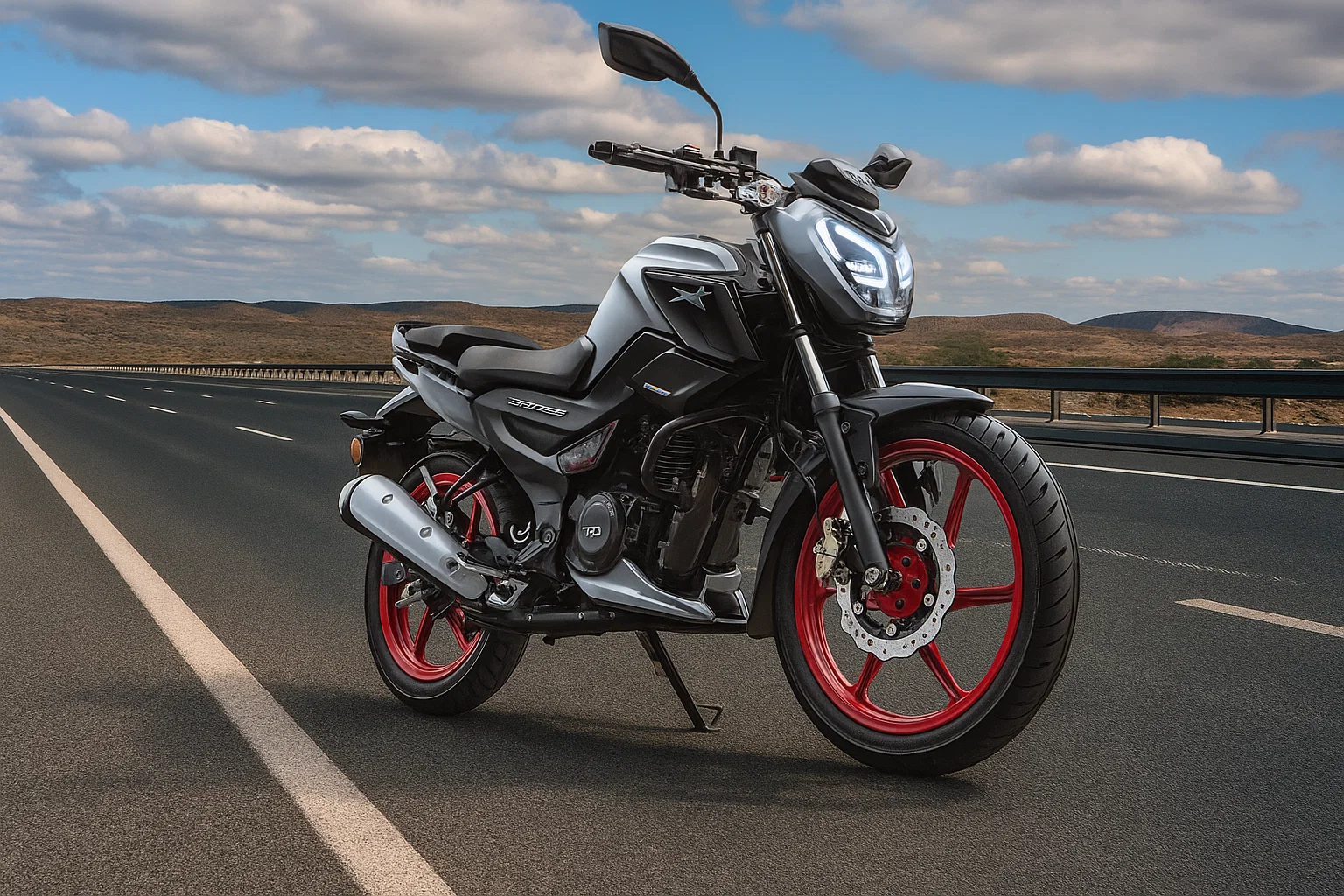
- Styling: The Raider looks like a scaled-down streetfighter angular tank shrouds, split seat (on select trims), snappy tail section. It reads “sporty” without going overboard, which is why it appeals to commuters and college riders alike.
- Ergonomics: Neutral-sporty: slightly committed but upright enough for long commutes. The 780 mm seat works for a broad rider height range; pillion space is decent (split vs single seat is a personal preference).
- Fit & finish: TVS typically does well on panel fit, switchgear click and paint quality in this price band; the SX’s TFT presentation especially elevates perceived quality.
Engine Performance & Ride Feel
City: This is where the Raider shines. The 3-valve head breathes well at low to mid rpm, and the light kerb weight plus short gearing make darting through gaps easy. iGO Assist adds auto start-stop and torque assist off the line, trimming that first-meter sluggishness commuters hate and helping efficiency in stop-go traffic. TVS quotes 0–60 km/h in 5.8 s for iGO, which is genuinely brisk for 125 cc.
Highway: It will sit at 70–80 km/h without strain. Beyond that, progress is steady rather than explosive; after all, it’s a 125. The Raider’s chassis, 17-inch wheels and suspension tune keep it composed on flyovers and patchy B-roads.
Vibes & refinement: Typical TVS smoothness at commute speeds; a faint buzz near the top end is normal for the class.
Fuel Efficiency: Realistic Numbers to Expect
This is where online figures can confuse buyers:
- Some portals list ARAI/claimed economy anywhere between 56.7 km/l and 71.94 km/l depending on model year, test cycle and variant.
- Independent tests and mixed-use rider reports consistently land around ~55–60 km/l in the real world, which is excellent for a bike this quick.
Takeaway: Expect mid-50s to ~60 km/l in normal city use if you ride sensibly; Eco/Power modes and iGO start-stop can swing results either side of that.
Features & Tech (what you actually use)
- TFT cluster (SX): A crisp 5-inch unit with SmartXonnect. You get turn-by-turn navigation, ride stats, call/SMS alerts and even voice assist on compatible phones. It’s one of the most complete dashboards in the 125cc space.
- Riding modes: Eco/Power modes help you tune response for traffic or brisk runs.
- iGO Assist (select variant): Start-stop + electric torque assist. Better launches, less fuel wasted idling.
- Under-seat storage & USB: Handy cubby for wallet/gloves and optional USB charging (varies by market/trim; check local bike).
- Lighting & safety: LED elements (variant-dependent), SBT linked braking. Note: no ABS on Raider as of writing—if ABS is a must, see the Hero Xtreme 125R section below.
Comfort, Handling & Braking
- Suspension: Tuned for Indian roads—supple at low speeds yet controlled over big undulations.
- Steering: Light at parking speeds, predictable on the move; inspires confidence for new riders too.
- Brakes: The 240 mm front disc + SBT setup offers strong bite and stable stops for the segment. If you regularly ride in the wet or on highways, consider riding technique upgrades, since there’s no ABS safety net here.
Ownership: Warranty, Service & Reliability
- Warranty: TVS motorcycles are covered by a 5-year/60,000 km warranty policy—reassuring for long-term owners.
- Service: TVS’ network is wide, spares are reasonably priced, and the 125cc platform is proven. If you’re clocking big city miles, factor periodic chain/sprocket care and brake shoe/pad wear into your annual budget.
Colours & Special Editions
The palette rotates across trims and seasons. You’ll commonly find Fiery Yellow, Forza Blue, Wicked Black, Blazing Blue, Striking Red among regular colours, while the Super Squad Edition brings official themed graphics like Iron Man and Black Panther (availability varies by city and time). Check with your local dealer for the latest lot.
The Competition (2025 snapshot)
1) Hero Xtreme 125R (with ABS option)
Hero’s sporty 125 comes with the big headline: single-channel ABS on higher trims—rare in this class. Its engine makes ~11.4–11.55 PS and 10.5 Nm, and pricing currently sits roughly ₹98,425–₹1.02 lakh ex-showroom, with a new single-piece seat ABS variant at ₹1,00,100 launched in Aug 2025. If you want ABS within 125 cc, this is your strongest alternative.
Where Raider wins: TFT richness (SX), SmartXonnect ecosystem, overall polish and city pep (especially iGO).
Where Hero wins: ABS availability and slightly sharper braking confidence at the limit.
2) Bajaj Pulsar N125 / NS125
Bajaj now fields two sporty 125s. The newer Pulsar N125 claims 12 PS & 11 Nm, modern styling and a competitive price band; NS125 offers a familiar Pulsar feel with fresh updates including a BT cluster on some trims and an ABS variant on the upper end. If you prioritise outright punch and brand street cred, these are worth a look.
Where Raider wins: Better connected tech on SX, lighter kerb weight feel, more commuter-friendly ergonomics and efficiency.
Where Bajaj wins: Strong power figures, broad variant ladder (including ABS on NS125 ABS).
3) Honda SP125 (steady, efficient)
Honda’s SP125 stays a refinement king with frugal FE and clean design. Pricing overlaps Raider’s mid/high variants in many cities, though its feature list feels modest next to Raider SX’s TFT bundle. (Check your city quotes for the latest SP125 prices.)
New arrivals to watch: Honda CB125 Hornet is coming in at a more premium slot, but it shows how hot the 125cc sporty-commuter space is getting in 2025.
Which TVS Raider 125 variant should you buy?
- On a tight budget (want style + efficiency):
Single-Seat/Drum or Split-Seat (Disc) depending on your comfort and price. If your city has hilly sections or you often carry a pillion, pick the front disc trim for stronger braking. - Primarily city use, heavy traffic, want the zippiest launches & best FE tools:
Go iGO Assist. The start-stop + electric torque assist make a real difference in congested cores, and the variant’s pricing is sensible versus SX. - Tech-savvy rider who loves gadgets & navigation:
SX (SmartXonnect). The 5-inch TFT, voice assist and connected features are segment-toppers and worth it if you’ll actually use nav, caller ID and ride analytics. - Want a special look:
Super Squad Edition if your city has stock—mechanically the same, with unique livery.
Pros & Cons
Pros
- Punchy 3-valve motor; eager city responses
- Best-in-class connected tech on SX (TFT, SmartXonnect, nav, voice assist)
- Real-world economy ~55–60 km/l if ridden sensibly
- Comfortable ergos & confidence-inspiring chassis/brakes (SBT)
- Wide variant spread including iGO Assist for start-stop city life
Cons
- No ABS (competitors like Hero Xtreme 125R and Bajaj NS125 offer it on top trims)
- Claimed mileage figures online are inconsistent; rely on real-world tests
- Price overlap with 150–160cc entry bikes if you stretch to SX in some cities (check on-road)
On-Road Price Examples (India)
On-road prices vary by state taxes/insurance. As a ballpark, Delhi on-road for SX (SmartXonnect) hovers around ₹1.20 lakh, with lower variants tracking proportionately below. Always get a live quote for your PIN code.
Fuel & Emissions: OBD-2, E20 & what it means to you
- OBD-2: The Raider line is now BS6 Phase-2/OBD-2 compliant, meaning better on-board diagnostics and emissions control—standard for new bikes post-2023.
- E20 fuel: Many current TVS bikes (including Raider batches) are aligned with India’s E20 roadmap. That said, check the fuel-cap sticker/owner’s manual of your specific unit to confirm E20 compatibility and avoid warranty issues.
Maintenance Tips to Maximise Your Raider’s Value
- Chain care every 500–700 km (or sooner in monsoon): proper lube and slack adjustment keep response crisp.
- Tyre pressure checks weekly: a small deviation hurts FE and handling.
- Use Eco mode & iGO start-stop (where equipped): helps deliver the real-world 55–60 km/l sweet spot.
- Keep the air filter clean: critical in dusty cities for throttle response and FE.
- Stick to TVS-approved oils & intervals to preserve the 5-year warranty.
Frequently Asked Questions (FAQ)
Yes. Its light weight (123 kg), responsive 3-valve engine and short gearing make it effortless in traffic. iGO Assist enhances stop-go usability.
No. It uses SBT (synchronised braking). If ABS is non-negotiable for you, consider the Hero Xtreme 125R ABS or Bajaj NS125 ABS.
Plan for ~55–60 km/l in mixed riding. Lab/claimed numbers vary more widely, from mid-50s to low-70s km/l depending on source and variant.
For most city riders, iGO Assist balances price, city features and efficiency. If you do lots of navigation and love gadgets, SX (SmartXonnect) is worth the stretch.
At 780 mm, the Raider is approachable for many riders; test-sit at a showroom to verify reach and comfort.
Yes Super Squad Edition with themed graphics like Iron Man/Black Panther appears periodically. Availability is city- and batch-dependent.
Conclusion: Should you buy the TVS Raider 125 in 2025?
If your brief reads “sporty-commuter that’s fun, frugal and future-ready,” the tvs raider 125 remains one of the most compelling choices under ₹1.25 lakh on-road. It nails the big three performance, practicality and tech better than most rivals, and it does so without destroying your monthly fuel budget. The only real miss is ABS, which some competitors now offer on top trims. If ABS is a must, shortlist the Hero Xtreme 125R ABS (and the NS125 ABS). If you can live with SBT and you value a richer TFT/connected experience, the Raider especially iGO for city warriors or SX for tech lovers earns a confident buy.
Sources & References
Key specs, dimensions, braking hardware and weights are verified from TVS’ official Raider specifications page. Variant introductions, pricing windows and feature sets are cross-checked against TVS’ official pages and reputable Indian auto publications. Where mileage claims differ by source, I’ve cited the range and leaned on independent road-test data for real-world guidance.